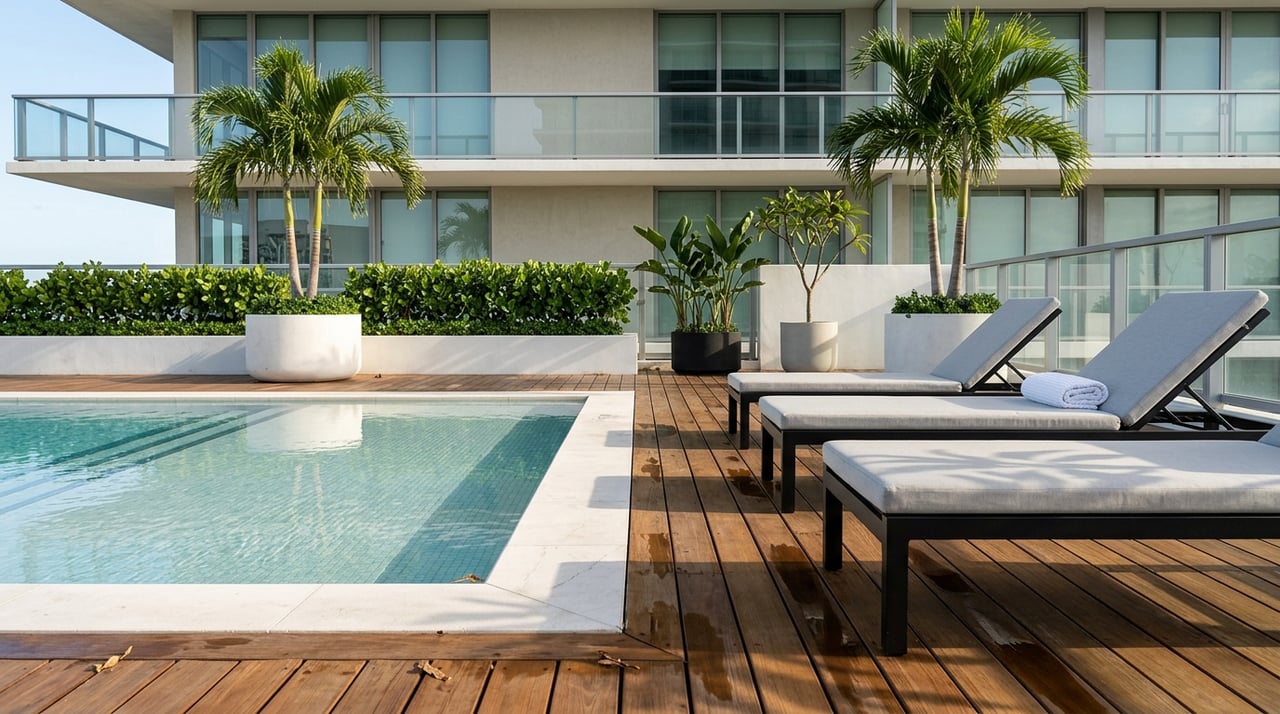
Trying to choose between Midtown Miami and Brickell for condo living? It is a smart question, because both neighborhoods offer a strong urban lifestyle, but they deliver it in very different ways. If you want the right fit for your routine, your budget, and your long-term goals, the details matter. Let’s break down how Midtown and Brickell compare so you can see which one feels more like home.
Midtown vs. Brickell at a Glance
Midtown Miami and Brickell are both major condo districts within the City of Miami, but they appeal to different versions of city life. Midtown is closely tied to the Design District and Wynwood edge, while Brickell is Miami’s financial core and a large mixed-use hub centered around places like Brickell City Centre.
If you are deciding where to buy, think less about which area is "better" and more about which one matches how you want to live. One neighborhood leans more design-forward and lifestyle-driven. The other leans more transit-connected and workday-efficient.
Price Comparison in 2026
As of April 2026, Realtor.com shows Midtown Miami with a median listing price of $750,000. Brickell comes in slightly lower at $734,500.
That does not mean Midtown is automatically the more expensive market in every practical sense. Brickell has a slightly higher asking price per square foot at $744, compared with Midtown at $715, which suggests buyers may pay more for space efficiency and central location in Brickell.
Here is the quick snapshot:
| Neighborhood | Median Listing Price | Median Rent | Homes for Sale | Median Days on Market |
|---|---|---|---|---|
| Midtown Miami | $750,000 | $3,738/month | 771 | 101 |
| Brickell | $734,500 | $3,775/month | About 1,200 | 92 |
Both neighborhoods are labeled buyer’s markets on Realtor.com. Both also show a 95% sale-to-list ratio, which suggests buyers may still find room to negotiate.
Walkability and Daily Convenience
If being able to step outside and walk to dining, shopping, and everyday errands matters most, both neighborhoods perform well. Midtown posts a representative Walk Score of 98, which points to excellent walkability inside the neighborhood.
Brickell posts a representative Walk Score of 100, which puts it at the very top tier for urban convenience. In practical terms, both areas support a walkable lifestyle, but Brickell has the edge if you want a more complete live-work-play setup tied into the broader city core.
Transit Access and Car-Light Living
This is one of the clearest differences between the two neighborhoods. Midtown has a representative Transit Score of 51, and Miami-Dade transit materials identify Midtown as served by the Biscayne trolley route, including The Shops at Midtown Miami as a transit-served destination.
Brickell is much stronger for residents who want to rely less on a car. A representative Brickell address posts a Transit Score of 98, and Miami-Dade says Metromover operates seven days a week in the Brickell area.
Brickell City Centre connects directly to the Brickell City Centre Metromover station and sits about a two-block walk from Brickell Metrorail Station. The first phase of The Underline also opened in Brickell, adding another walking and biking option.
If your routine involves commuting, frequent meetings, airport connections, or moving around the city without driving, Brickell stands out. If your focus is more local neighborhood access with occasional broader trips, Midtown can still work well.
Condo Style and Building Feel
The condo experience also feels different in each neighborhood. Midtown’s product often comes across as newer, more boutique in tone, and more design-led.
For example, Hyde Midtown highlights amenities like a 7th-floor pool terrace, heated lap pool, spa, fitness center, private screening theater, beach club access, valet, concierge, and a tennis court. 2Midtown promotes loft-style living with 24/7 concierge and security, a fitness center, resident lounge, resort-style pool, and valet.
Brickell’s condo lifestyle often sits inside a larger mixed-use environment. At RISE, Swire describes 390 luxury condos with one- to five-bedroom layouts, high ceilings, floor-to-ceiling windows, premium finishes, a nearly one-acre amenity deck, and direct access to the larger Brickell City Centre ecosystem.
That broader ecosystem is a major part of Brickell’s identity. Brickell City Centre itself is a 4.9 million-square-foot mixed-use project with a retail center, two office towers, two condominium towers, and EAST Miami, plus more than 120 shops and restaurants connected at the Metromover level.
Midtown Lifestyle: Design and Energy
Midtown tends to fit buyers who want an urban neighborhood with a slightly looser pace and a design-focused vibe. Its location near the Design District and Wynwood edge gives it a distinct identity that feels creative, modern, and lifestyle-oriented.
The condo product often supports that feeling. You will find resort-style amenities, polished common spaces, and buildings that emphasize indoor-outdoor leisure, wellness, and social areas.
For many buyers, Midtown feels like city living with a bit more breathing room. It is still urban and active, but it is usually less tied to the office-core atmosphere that defines Brickell.
Brickell Lifestyle: Core City Living
Brickell is the choice for buyers who want the most recognizable downtown Miami condo experience. It combines residential towers, office space, retail, dining, and transit into one dense urban district.
That makes it especially appealing if you want everything close at hand. For some buyers, that means a shorter daily routine. For others, it means a stronger lock-and-leave lifestyle with easy access to meetings, dining, and transportation.
Brickell can feel faster and more intense than Midtown, but that is also part of its appeal. If you want a neighborhood that feels plugged into Miami’s business and mixed-use core, Brickell is hard to beat.
Which Neighborhood Fits Your Priorities?
The better choice depends on what matters most in your day-to-day life. Here is a simple way to think about it.
Choose Midtown if you want:
- A design-district-adjacent location
- Strong walkability within the neighborhood
- Resort-style condo amenities
- A more boutique or lifestyle-branded building feel
- A slightly slower urban pace
Choose Brickell if you want:
- The strongest transit access
- A true car-light urban routine
- A dense live-work-play setting
- Large mixed-use projects and retail integration
- A classic downtown Miami condo benchmark
What the Market Data Suggests
The market data shows that neither neighborhood is a clear winner for every buyer. Midtown’s median asking price is slightly higher, but Brickell’s price per square foot is higher. Brickell also has more inventory and a slightly faster median time on market.
That combination suggests Midtown and Brickell are serving somewhat different buyers and unit types, even when headline pricing looks close. It also reinforces why condo selection in Miami should go beyond broad neighborhood labels and focus on building type, floor plan, amenities, and your intended use.
A Smart Way to Make the Decision
If you are serious about buying in either Midtown or Brickell, compare more than just price. Look closely at your transportation habits, how often you want to walk to dining or shopping, whether you prefer a boutique amenity experience or a large integrated development, and how the building fits your long-term plans.
In a market where both neighborhoods still show buyer-friendly conditions, you may have room to be selective. That is especially important if you are choosing between a primary residence, a part-time Miami home, or an investment-oriented condo.
For luxury buyers and international purchasers, building-level guidance matters just as much as neighborhood-level insight. The right opportunity may come from a resale condo, a high-end rental strategy, a pre-construction position, or even an off-market option that aligns better with your goals.
If you want help comparing Midtown and Brickell condo opportunities with a clear, building-by-building strategy, Denis Smykalov can help you evaluate the market with the kind of local insight and concierge-level guidance that makes complex decisions easier.
FAQs
Which neighborhood is more walkable for condo living in Miami?
- Both are highly walkable, but Brickell has a representative Walk Score of 100 compared with Midtown’s 98.
Which neighborhood has better transit access, Midtown Miami or Brickell?
- Brickell has much stronger transit access, with a representative Transit Score of 98, plus Metromover and nearby Metrorail connections, while Midtown’s representative Transit Score is 51.
Is Midtown Miami or Brickell more expensive to buy a condo in 2026?
- Midtown has a slightly higher median listing price at $750,000 versus Brickell’s $734,500, but Brickell has a higher asking price per square foot.
Which neighborhood is better for a car-light lifestyle in Miami?
- Brickell is the stronger choice for a car-light lifestyle because of its deeper transit network and stronger connection to Metromover, Metrorail, and walkable mixed-use destinations.
What type of condo lifestyle does Midtown Miami offer?
- Midtown generally offers a design-forward, lifestyle-driven condo experience with resort-style amenities and strong access to nearby retail, dining, and surrounding cultural districts.
What type of condo lifestyle does Brickell offer?
- Brickell offers a denser downtown condo lifestyle centered on mixed-use development, strong transit access, office-core convenience, and large integrated retail and dining destinations.